Orbit & AuroraNotes from a northern sky

Canadian astronomy, space science and auroras

Canada, looking upward.

Explore Canadian space science through light, instruments, and missions. Orbit & Aurora connects northern lights with atmospheric physics, revisits Alouette's scientific record, explains CHIME's unusual telescope, and follows Canada's contributions to Webb using agency and university sources throughout each chapter.

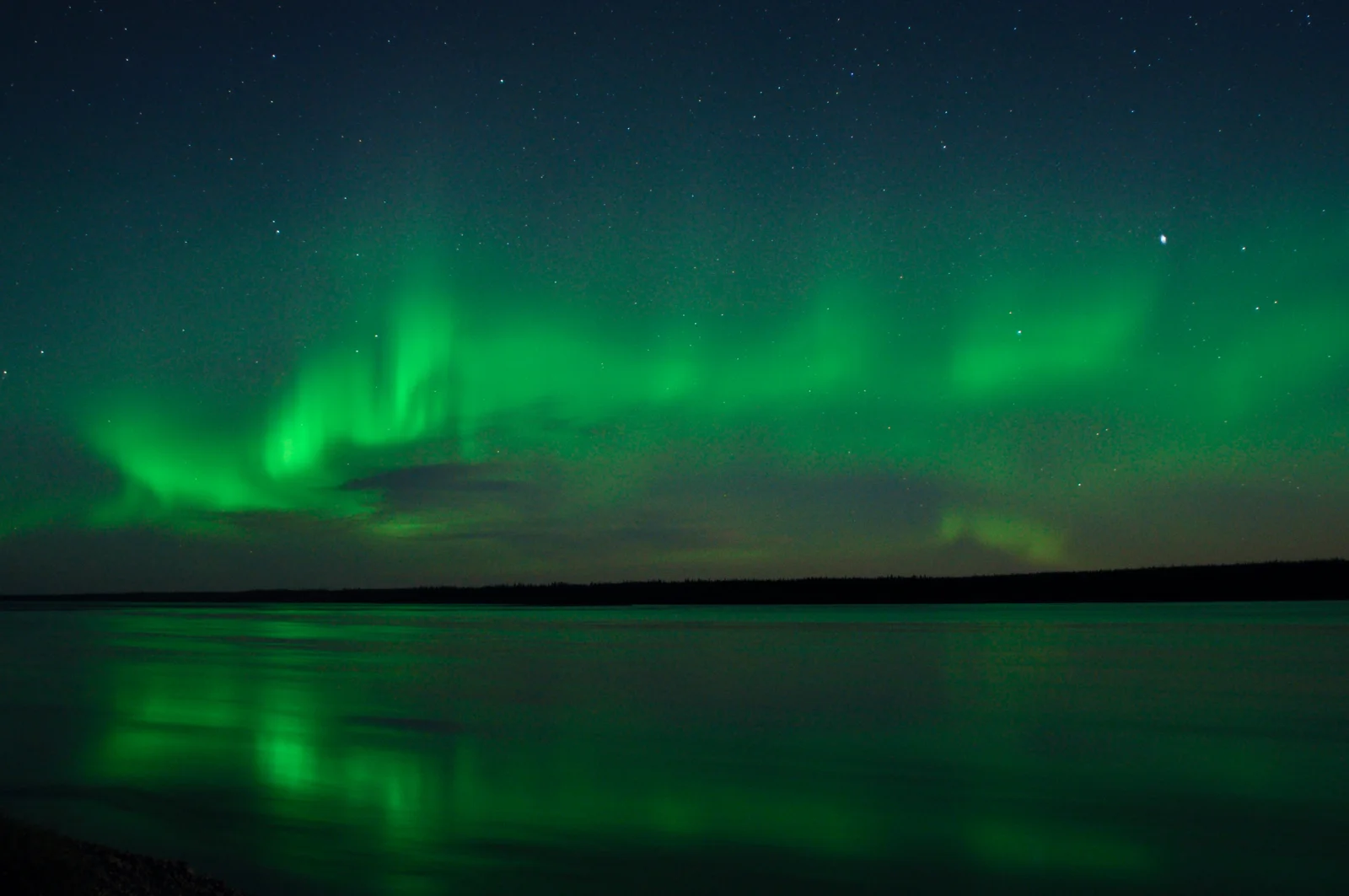
Green aurora reflected on La Grande River beneath a starry night sky.
Aurora over La Grande River at Chisasibi, Quebec, in September 2019.Carl Young · CC BY-SA 4.0
01

Atmosphere and space

What the colours of an aurora reveal

The northern lights join events in space with light emitted high in Earth's atmosphere. Their location, colour, and visibility describe different parts of that connection. Canadian Space Agency explanations help separate the physical display from the conditions needed to see it.

Read the story
02

Canadian missions

Alouette's journey from orbit to the archive

Alouette-I carried a Canadian scientific instrument into orbit in 1962 and left a record that outlasted the spacecraft's working life. Its history joins satellite engineering with the less visible work of recording, preserving, and recovering observations for later study.

Read the story
03

Radio astronomy

The Canadian telescope that lets the sky move

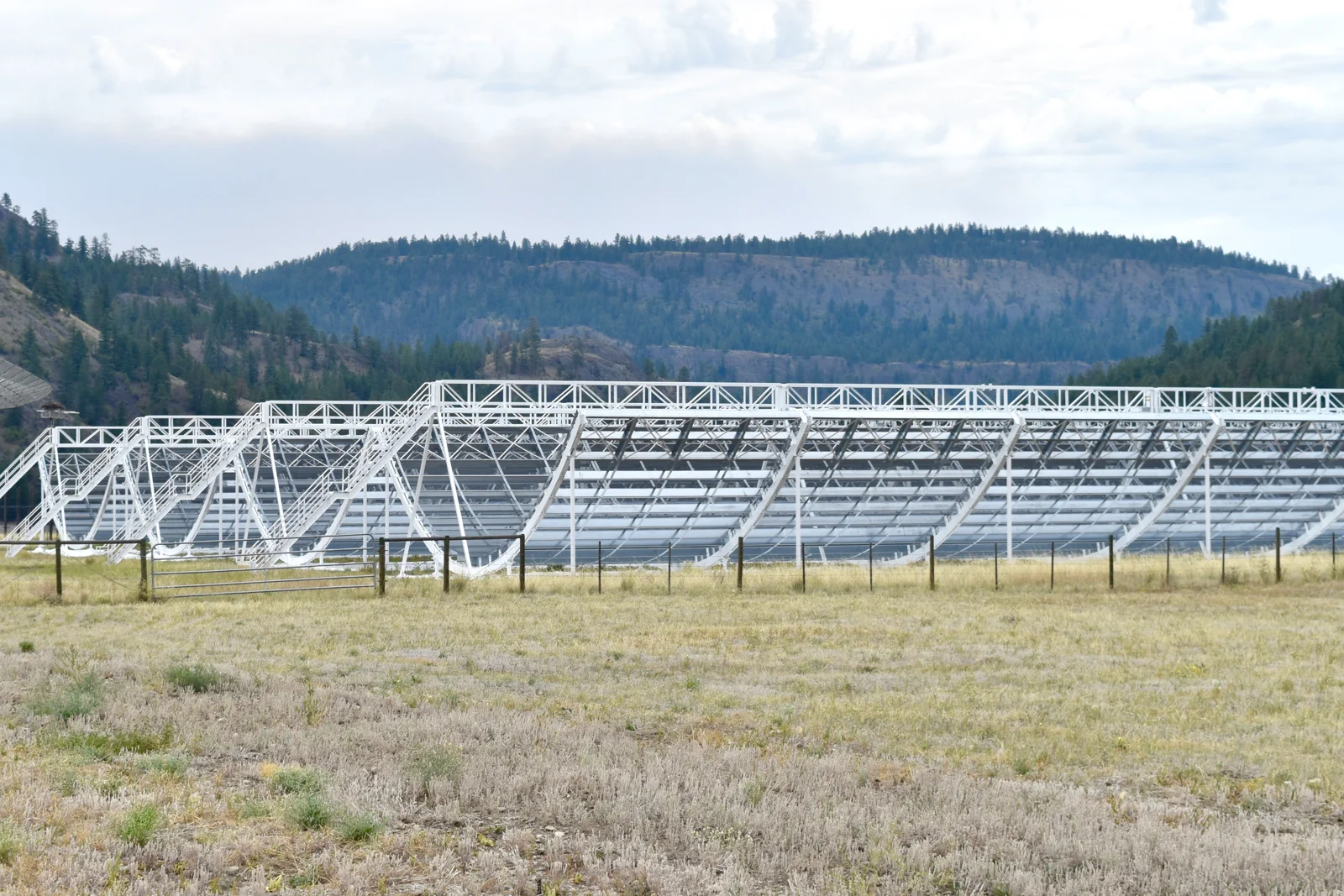
CHIME looks unlike the familiar image of a telescope on a moving mount. Its long reflectors remain fixed while Earth's rotation carries the sky overhead. Built in British Columbia, the instrument uses radio signals and extensive computing to study several kinds of cosmic behaviour.

Read the story
The white metal reflectors of the CHIME radio telescope below a wooded hillside.
The Canadian Hydrogen Intensity Mapping Experiment (CHIME) telescope in British Columbia, photographed in August 2019.Z22 · CC BY-SA 4.0
04

Space instruments

Canada's two roles aboard the Webb telescope

Canada supplied two closely connected pieces of the James Webb Space Telescope: a sensor that helps it point precisely and an instrument that examines infrared light. Their different jobs show how a successful observation depends on both stable guidance and scientific measurement.

Read the story